AI Voice Deepfakes and Impersonation Scams: How to Protect Yourself
If you have ever thought, “I would never fall for a scam,” you are not alone. Most people feel that way right up until a message arrives that sounds urgent, personal, and believable.
Unfortunately, scams have gotten a lot better. In particular, we are seeing more impersonation attempts that use AI to mimic someone’s voice. It could sound like a family member, a banker, or even an advisor. The goal is usually the same: create pressure, get you to move money, or convince you to share sensitive information.
This post is a practical, no-panic guide to what these scams look like and what to do when something feels off.
Why this is showing up more right now
Two things are happening at the same time:
- Technology is making scams more convincing. AI tools can copy writing styles, produce realistic emails, and in some cases generate voice audio that sounds close enough to fool someone in a stressful moment.
- Scammers are getting better at psychology. They do not need perfect technology if they can get you anxious, rushed, or embarrassed. Most of these attempts are built around urgency and emotion.
The best defense is not being “tech savvy.” The best defense is having a simple process you follow every time.
What these scams typically sound like
A good impersonation scam often follows a familiar script. Fraudsters may:
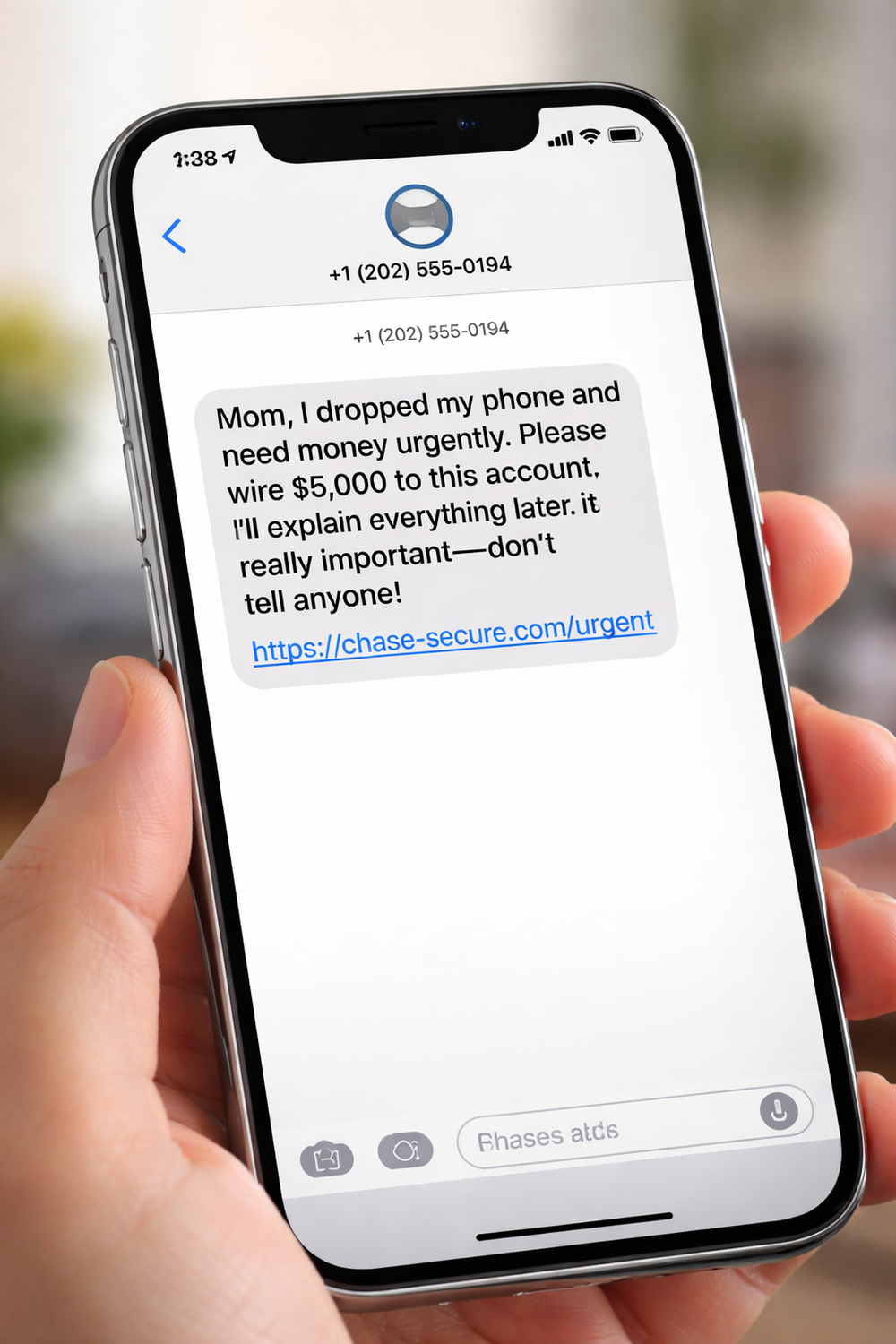
- Call and sound like someone you know, claiming there is an emergency
- Ask you to wire money, change bank instructions, or verify account details
- Pressure you to act quickly and keep it private (for example: “Please do not tell anyone, just do this now”)
- Send follow-up texts or emails with links that look legitimate
- Ask you to read back a one-time security code that just hit your phone
The three biggest red flags
1) Urgency
If the request comes with a countdown, assume it could be a trap. Scammers want to reduce your time to think.
2) A sudden change in how you communicate
If someone who normally emails you is suddenly texting you, or the conversation jumps to a new number, or you are pushed to a different app, slow down.
3) Money movement or account changes
Any request to move money, change wiring instructions, add a new bank, reset a password, or confirm personal information deserves extra scrutiny.
Our firm’s policy, and what we will never do
When it comes to money movement and sensitive changes, we follow multi-step verification. That protects you and it protects your accounts.
Here is what you can always expect from us:
- We will never ask for your passwords or your one-time verification codes (multi-factor authentication codes).
- We will verify money movement requests using a call back to a trusted number on file and or secure verification steps.
- If anything feels off, we would rather you pause and call us every single time.
If someone ever claims to be us and tries to bypass that process, treat it as suspicious.
What you can do today (simple, effective steps)
These are not complicated, and they work.
- Slow down. Urgency is the red flag that shows up most often.
- Verify independently. Hang up and call back using a saved number. Do not use the number that called you.
- Do not share codes. Never read a one-time code to anyone. Not to a bank, not to support, not to a family member in a hurry.
- Use strong logins. Enable multi-factor authentication wherever possible (email, banking, brokerage, social accounts).
- Be careful with links. Do not click unexpected links, even if the message looks familiar. Instead, go directly to the site or app you normally use.
- Keep your contact info current. A current phone number and email help us verify requests quickly and safely.
A quick “pause and confirm” script you can use
Sometimes it helps to have words ready. Here are a few lines that work well:
- “I cannot do anything right now. I am going to call you back using the number I already have.”
- “I do not share security codes. If you need something, I will contact the institution directly.”
- “I need to verify this through my advisor. I will get back to you.”
You do not need to argue. You do not need to explain. You just need to pause and verify.
If you receive a suspicious call, text, or email
If something feels weird, treat that feeling like a smoke alarm. It might be nothing, but it is worth checking.
Even if you already clicked something, do not be embarrassed. The faster you reach out, the more options we have to help.
Extra credit: protect your family too
Impersonation scams often target families, especially when scammers believe money could move quickly in an emergency.
A few ideas that can help:
- Create a family rule: money never moves based on a single call or text.
- Pick a simple verification question only close family would know (nothing that can be found on social media).
- Encourage loved ones to call you back using a saved number, even if the call sounds real.
These steps are simple, and they prevent a lot of damage.
Bottom line
Scams are getting more convincing. That does not mean you need to live in fear. It just means you need a plan.
If you slow down, verify independently, and refuse to share codes or move money under pressure, you will avoid the vast majority of impersonation attempts.
If you ever receive a message